Karryn’s Prison Screenshots

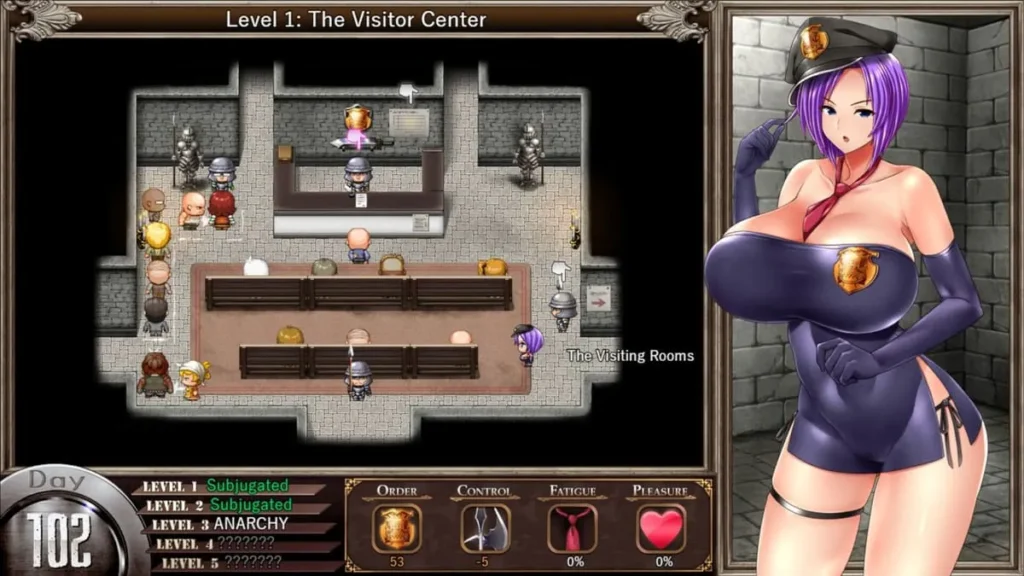
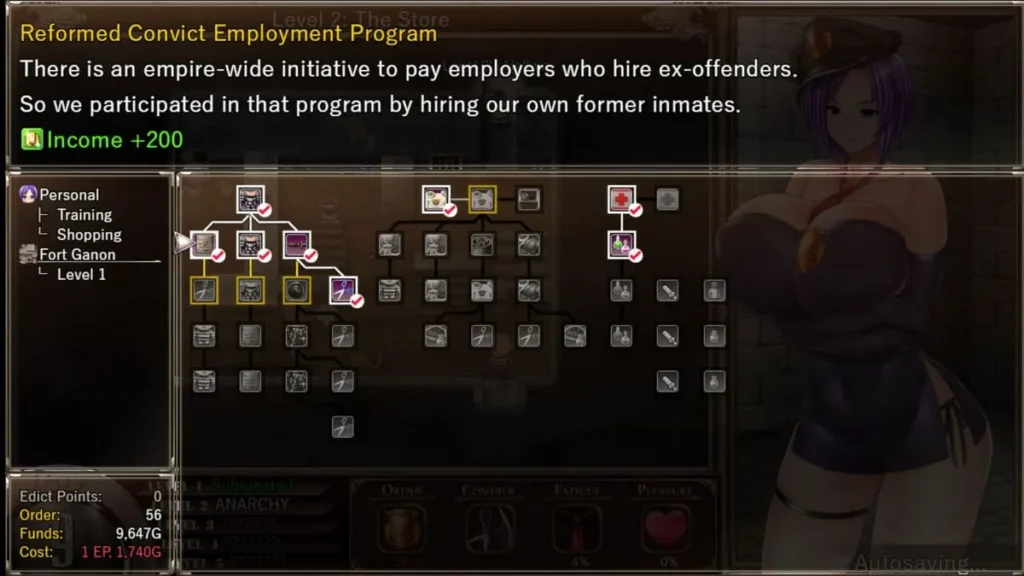







Karryn’s Prison review
Explore the innovative mechanics, corruption system, and prison management features that make this indie title unique
Karryn’s Prison stands out as a uniquely designed indie title that blends multiple gameplay systems into a cohesive experience. The game follows Karryn, who becomes the new warden of a prison with a notably lenient regime, setting the stage for an intriguing narrative. What distinguishes this title from other indie games is its exceptional integration of mechanics with storytelling, particularly through its corruption system that directly ties player choices to character progression. The game has garnered significant attention for its polished blend of role-playing elements, management simulation, and sandbox gameplay. Whether you’re interested in understanding the game’s innovative mechanics or exploring what makes it a standout in the indie gaming community, this guide covers the essential aspects that define the Karryn’s Prison experience.
Understanding Karryn’s Prison: Core Gameplay Systems
Diving into Karryn’s Prison gameplay mechanics for the first time can feel overwhelming. You’re handed the keys to a struggling facility, a motley crew of inmates, and a vague directive to “fix things.” But within an hour, the genius of its design clicks into place. This isn’t just another management sim or a straightforward RPG—it’s a polished, reactive sandbox where every system leans on and influences the others. Your choices as the Warden don’t just affect a meter; they reshape the entire world, your character, and how you play. It’s this deeply interconnected corruption system game design, fused with warden management gameplay and classic JRPG mechanics indie game sensibilities, that creates something truly special. You can experience the full narrative arc in a satisfying 12-hour playthrough, but the real magic is in the countless ways you can get there.
What Makes the Corruption Mechanic Revolutionary 🎭
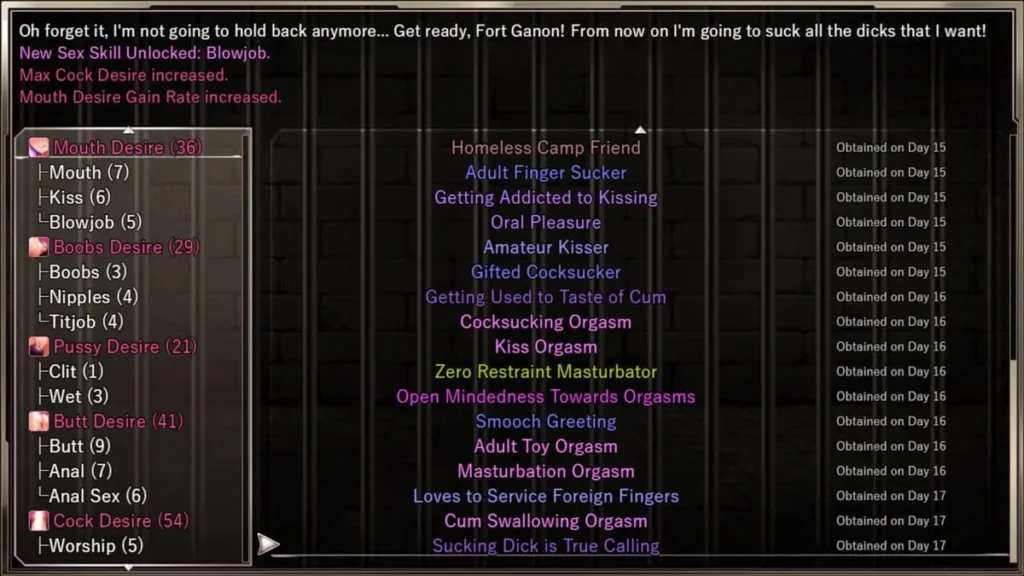
At its heart, Karryn’s Prison is a game about pressure, temptation, and consequence. The corruption system game design isn’t a simple good/evil slider tucked away in a menu. It’s the game’s central nervous system, a dynamic force that reacts to your every decision, both big and small. I remember my first playthrough, determined to be a firm but fair warden. I denied special requests, enforced strict punishments, and focused solely on prison efficiency. The game responded. Inmates became more defiant, events turned against me, and progress felt like an uphill battle. The system was testing my resolve.
Then, in another run, I decided to see what would happen if I started cutting corners—accepting a dubious “favor” here, looking the other way there. The shift was immediate and profound. New dialogue options unlocked. Characters who were once hostile became… amenable. The entire tone of the prison softened, but so did my Warden’s capabilities in certain areas. This is the brilliance: corruption is a tool, not a punishment. It opens up entirely new branches of the character progression system, alternative solutions to management problems, and even different narrative endings. It’s a mechanic that asks, “How much are you willing to compromise your principles for an easier time, or for different kinds of power?”
The system is woven into everything:
* Narrative Integration: Every major story beat and character interaction is filtered through your current level of influence. Your relationships with key inmates change dramatically.
* Gameplay Alteration: High security and low influence unlock powerful combat skills and management perks. Embracing a different path unlocks social abilities and entirely new methods of “conflict resolution.”
* Player Agency: It never feels like the game is judging you. It simply presents a world that logically reacts to your leadership style. This responsive freedom is a cornerstone of the game’s sandbox gameplay features.
To understand how this central pillar supports the entire experience, let’s look at how the three core systems interact:
| Gameplay System | Primary Player Activity | How Corruption Influences It | Resulting Gameplay Style |
|---|---|---|---|
| Corruption & Narrative | Making story choices, interacting with inmates. | Unlocks or locks dialogue paths, alters character motivations, changes available endings. | Defines your Warden’s personality and the story’s moral compass. |
| Prison Management | Assigning tasks, setting regime, handling incidents. | Offers shortcuts or “under the table” deals to solve problems, but may reduce long-term discipline. | Shifts management from strict authoritarian rule to a more… cooperative (if chaotic) atmosphere. |
| JRPG Progression | Building Karryn’s stats, unlocking passive and active skills. | Directly gates entire skill trees and powerful abilities. Different “builds” are only viable under certain conditions. | Creates distinct character builds (e.g., the Incorruptible Enforcer vs. the Persuasive Manipulator). |
This seamless integration is why reviewers and players alike praise it. Your management style dictates your moral standing, which dictates your combat capabilities, which in turn affects how you can manage future problems. It’s a breathtakingly cohesive loop.
Prison Management and Warden Responsibilities 🏛️
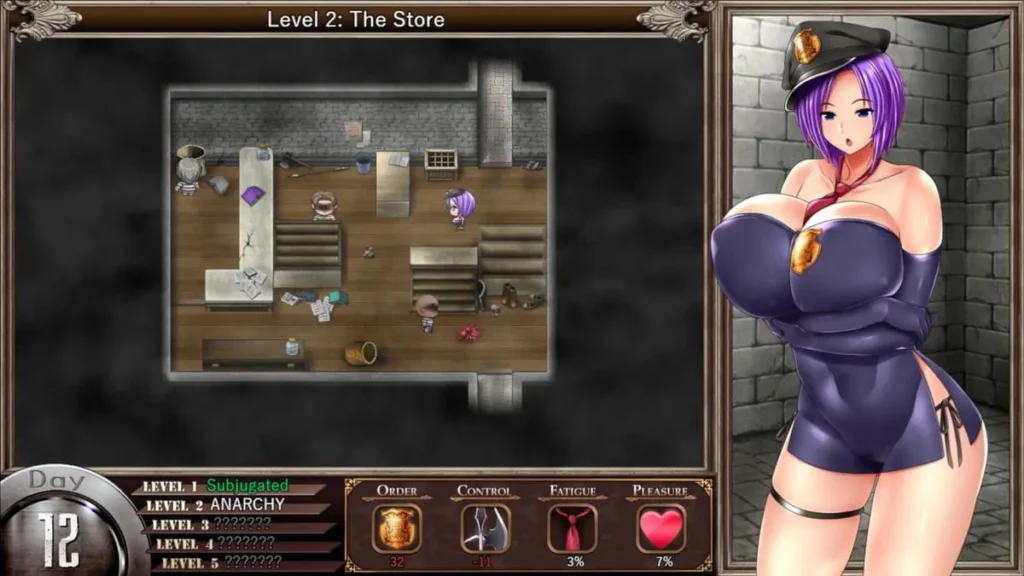
So, you’re the Warden. What does that actually mean day-to-day? The prison management simulation aspects of Karryn’s Prison are delightfully hands-on, moving far beyond simple menu management. You are not a distant bureaucrat; you are on the floor, making snap judgments that have immediate effects. Your core duties break down into a satisfying cycle of observation, decision, and consequence.
First, there’s the soft regime setting. This isn’t just a schedule; it’s the emotional temperature of your prison. You allocate time blocks for Work, Rest, and Meal times. Push too much work, and fatigue builds, leading to more incidents and rebellions. Too much rest, and inmates get restless. Finding the right balance for your current inmate population and your chosen management style is a constant, engaging puzzle. Do you run a tight ship to maintain order, or a lax one to quietly encourage certain behaviors that might benefit your other goals?
Then come the inmates themselves. Each has their own stats, personality, and hidden desires. Warden management gameplay shines in how you handle them individually. You can:
* Assign them to specific jobs (cleaning, cooking, crafting) based on their aptitudes.
* Intervene directly in disputes, choosing to punish, mediate, or even ignore the situation.
* Respond to personal requests, which are often the gateway to deeper storylines and significant shifts in your corruption system game design path.
I learned this the hard way. Early on, I tried to treat every inmate as a number on a clipboard, optimizing their job placement purely for efficiency. The prison ran, but it was a tinderbox. One particular inmate, constantly causing trouble, kept being sent to solitary. It was only when I finally engaged with her personal storyline—a choice that required a certain managerial “flexibility”—that I not only solved her behavioral issue but gained a surprisingly loyal and capable ally. The game constantly reminds you that you’re managing people, not assets.
Finally, you must expand and improve the facility itself. Using resources gathered by inmate labor, you can build new rooms, install training equipment, or create recreational spaces. These upgrades are crucial for boosting inmate stats (making them better workers or more formidable in other contexts) and unlocking new sandbox gameplay features. The sense of slowly transforming a dilapidated facility into a functioning (or dysfunctionally fun) operation is incredibly rewarding. Every management decision, from the macro regime to a micro interaction, feeds back into the larger web of systems, making you feel truly responsible for the world you’re creating.
JRPG Elements and Character Progression ⚔️
Beneath the warden’s uniform, Karryn is a JRPG protagonist at heart. The JRPG mechanics indie game framework here is not a shallow veneer; it’s the engine that drives your personal power and defines your strategic options. This is most evident in the brilliant passive system, which is the true core of the character progression system.
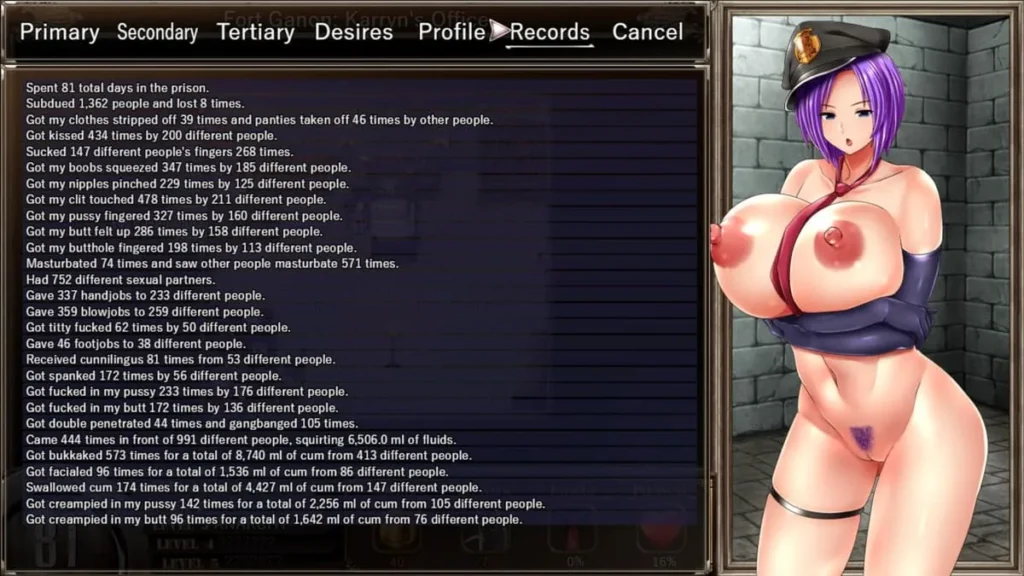
As you perform actions—whether winning fights, successfully managing inmates, or exploring certain narrative choices—you earn points to invest in a vast web of passive skills. These aren’t just “+5% Strength” buffs. They are transformative abilities that alter fundamental gameplay. One passive might allow you to pacify low-level inmates without a fight, completely changing how you patrol the halls. Another might increase the resources yielded when you take a more persuasive approach with a worker. You are literally building your Warden’s philosophy and methodology through this skill tree.
The progression is deeply tied to the other systems. Want to focus on the prison management simulation aspect? Invest in passives that improve work output, reduce fatigue, or give you better insights into inmate needs. Prefer to embrace the sandbox gameplay features and see where the story takes you? There’s a whole branch of social and charisma-based skills that only become viable as you explore different paths. My most memorable build was a “Diplomat Warden” who had barely any combat prowess but could talk down almost any conflict and inspire incredible productivity. It felt completely different from my first, combat-heavy run.
Combat itself uses classic turn-based JRPG structures but is deeply contextual. Fights can erupt from management failures, or you can seek them out for training and resource gathering. Your performance in battle is a direct reflection of your build and your current standing. An incorruptible warden might have access to powerful, disciplined strikes, while a warden who has embraced alternative methods might use skills that rely on a very different kind of influence. It’s a constant feedback loop: your management affects your corruption, which unlocks new progression options, which changes how you manage and fight.
This polished blend is what makes Karryn’s Prison gameplay mechanics so captivating. The JRPG mechanics indie game progression gives you tangible growth, the prison management simulation provides a rich, reactive world to apply that growth, and the revolutionary corruption system game design ties it all together with meaningful, player-driven consequences. You aren’t just following a story or optimizing a spreadsheet; you are role-playing a life, making tough calls, and living with the fascinating, interconnected results. It’s a masterclass in systemic game design that offers a unique experience with every set of keys you choose to pick up.
Karryn’s Prison represents a significant achievement in indie game design, successfully merging complex gameplay systems with compelling narrative elements. The game’s standout corruption mechanic, combined with its prison management simulation and JRPG progression systems, creates an experience that resonates with players seeking depth and innovation. The polished integration of these elements, coupled with thoughtful narrative design, has earned the game recognition as a standout title in the indie gaming community. Whether you’re drawn to the innovative mechanics, the engaging story of Karryn’s journey, or the overall design excellence, Karryn’s Prison offers a unique gaming experience that demonstrates the creative potential of independent developers. For those interested in exploring games that push creative boundaries and blend multiple genres seamlessly, this title deserves a place on your list.